
Bizarroland Math
When Political Numbers Eschew Arithmetic

By Conrad Phillip Kottak
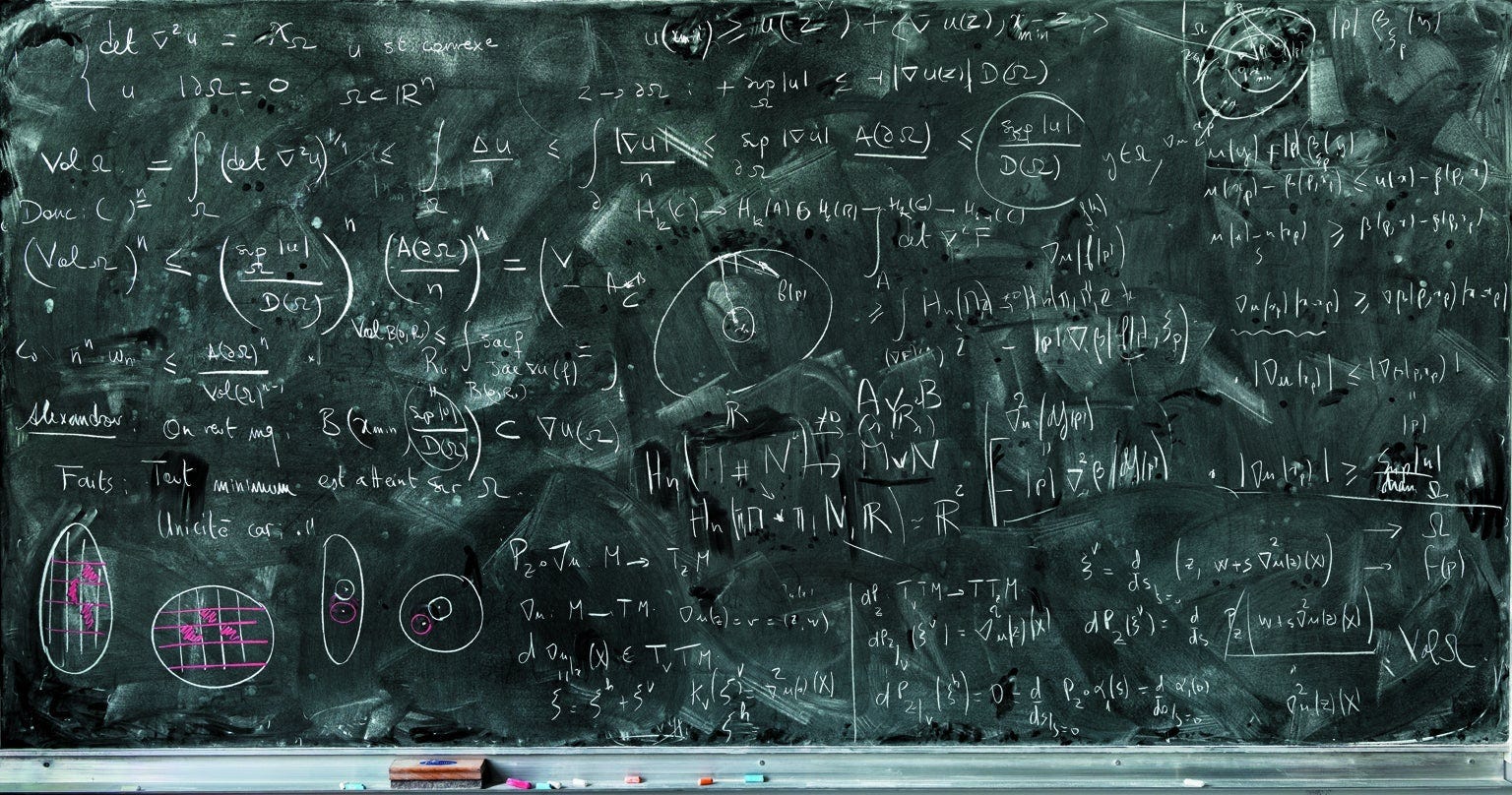

In modern political discourse, numbers often convey authority even when they exceed plausible scale.
I’ve made a conscious decision to limit my political commentary to issues that have not already been extensively discussed, but that nevertheless deserve attention. One such issue is the growing use of numerically impossible claims in American political life.
On February 26, 2026, the New York Times published a column by mathematician Aubrey Clayton titled “America, We Have a Math Problem.” Clayton argues that political leaders increasingly use numbers that are not merely exaggerated but mathematically implausible. His argument resonated strongly with me because I had addressed precisely the same phenomenon several months earlier.
On October 3, 2025, in my Substack column titled “Trump’s $17 Trillion Fantasy: Debunking the Biggest Number in Politics,” I examined the claim that administration policies had generated $17 trillion in new investment in the United States. That figure has since grown to $18 trillion. To understand how inflated such a claim is, consider that the entire U.S. economy, the sum of everything Americans produce in a year, totals about $30.5 trillion. Trump’s claim that tariffs added more than half that amount within months is not merely unlikely; it is impossible.
Saving More Lives Than Exist
Another example involves fentanyl interdiction. Attorney General Pam Bondi asserted that seizures had saved 119 million American lives, later revising that figure upward to 258 million. This would amount to saving most of the country. Thanks, Pam.
More modest claims can be equally revealing. Trump has asserted that each destruction of a drug-bearing boat in the Caribbean or Pacific will save 25,000 American lives. This number has no basis in reality. According to the Centers for Disease Control and Prevention, approximately 74,000 Americans die annually from fentanyl and other synthetic opioids. If each interdiction saved 25,000 lives, then three successful seizures would eliminate the entire yearly death toll from these drugs. Yet boat bombings continue, and so, tragically, do drug-related deaths.
When Percentages Lose Meaning
Large percentage claims raise similar problems. President Trump has asserted that his policies would reduce drug prices by 600 percent, 700 percent, or even 1500 percent. Such figures sound dramatic, but they collapse under scrutiny. A 100 percent reduction brings a price to zero. A 1500 percent reduction would push prices far past zero into negative territory. Pharmacies would pay customers to take medication.
Let’s say I currently pay about $15 for a rosuvastatin prescription. A 1500 percent reduction might let me take in a Broadway show (while bankrupting CVS). As Joe Biden might say, Trump’s drug claims are unadulterated malarkey.
The problem is not confined to economic claims. Public discussions of immigration offer additional examples. In a recent online discussion, a caller confidently asserted that there were 200 million undocumented immigrants living in the United States. The entire population of the country is about 342 million. Serious demographic estimates place the undocumented population closer to 12 million. In Bizarroland, ignorance is bliss.
Numerical Literacy and Civic Competence
These claims reflect a broader cognitive limitation. Humans are not programmed to understand very large numbers. Our intuitions evolved in small groups, where quantities rarely exceeded dozens or hundreds. Millions, billions, and trillions exist largely beyond direct human experience.
Against this background, numbers acquire symbolic power. They function less as measurements and more as signals of authority. Larger numbers convey greater urgency, strength, or success. A claim of $18 trillion carries more rhetorical weight than a claim of $2 trillion, regardless of plausibility.
Anthropologists have long understood that symbols derive their authority from cultural acceptance rather than empirical verification. Numbers, which appear objective and scientific, can function as especially potent symbols. Their apparent neutrality makes them difficult to challenge, even when they lack factual grounding.
Mathematician Aubrey Clayton makes a particularly important observation. When officials use absurd numbers, it suggests they believe the public will not examine them critically. Numerical literacy therefore becomes a form of civic competence.
Numbers, however, remain subject to the same empirical constraints as any other factual claim. They cannot exceed the population they describe. They cannot exceed the size of the economy from which they arise. They cannot produce negative prices at the pharmacy counter.
When numerical claims violate these constraints, they cease to function as measurements. They become rhetorical devices.


Reality remains stubbornly anchored in arithmetic, regardless of political claims.
Numbers should matter, but only when they are tethered to reality. A refresher course in basic arithmetic, as Clayton suggests, could indeed be beneficial. But the deeper issue is cultural. Citizens in a modern democracy must possess not only political opinions but numerical competence. Without it, public discourse becomes vulnerable to distortion, which, unfortunately, is a defining feature of our contemporary Bizarroland.