
Great Expectorations
Baseball, ritual, magic, and the clock

by Conrad Phillip Kottak
On opening day, it wasn’t the spitting that caught my attention. It was the clock. Baseball, once timeless, now runs on seconds. Yet even under pressure, players continue their small rituals, gestures that help them manage uncertainty. What looks like habit may be something deeper: a quiet form of magic that persists even when the game speeds up.
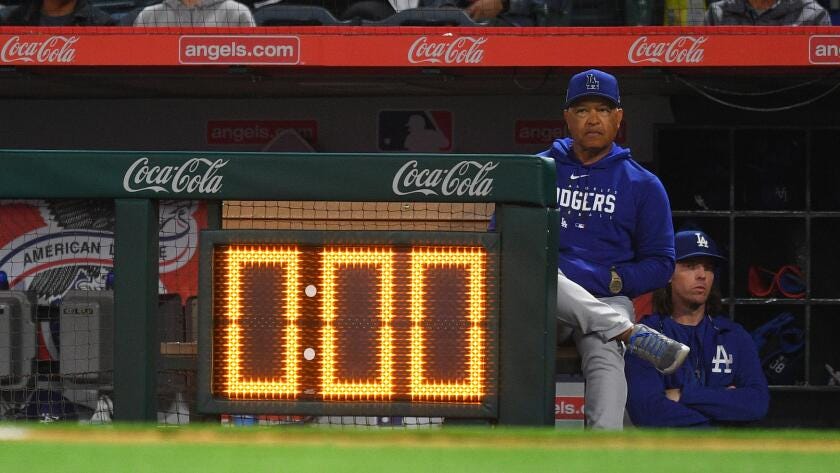
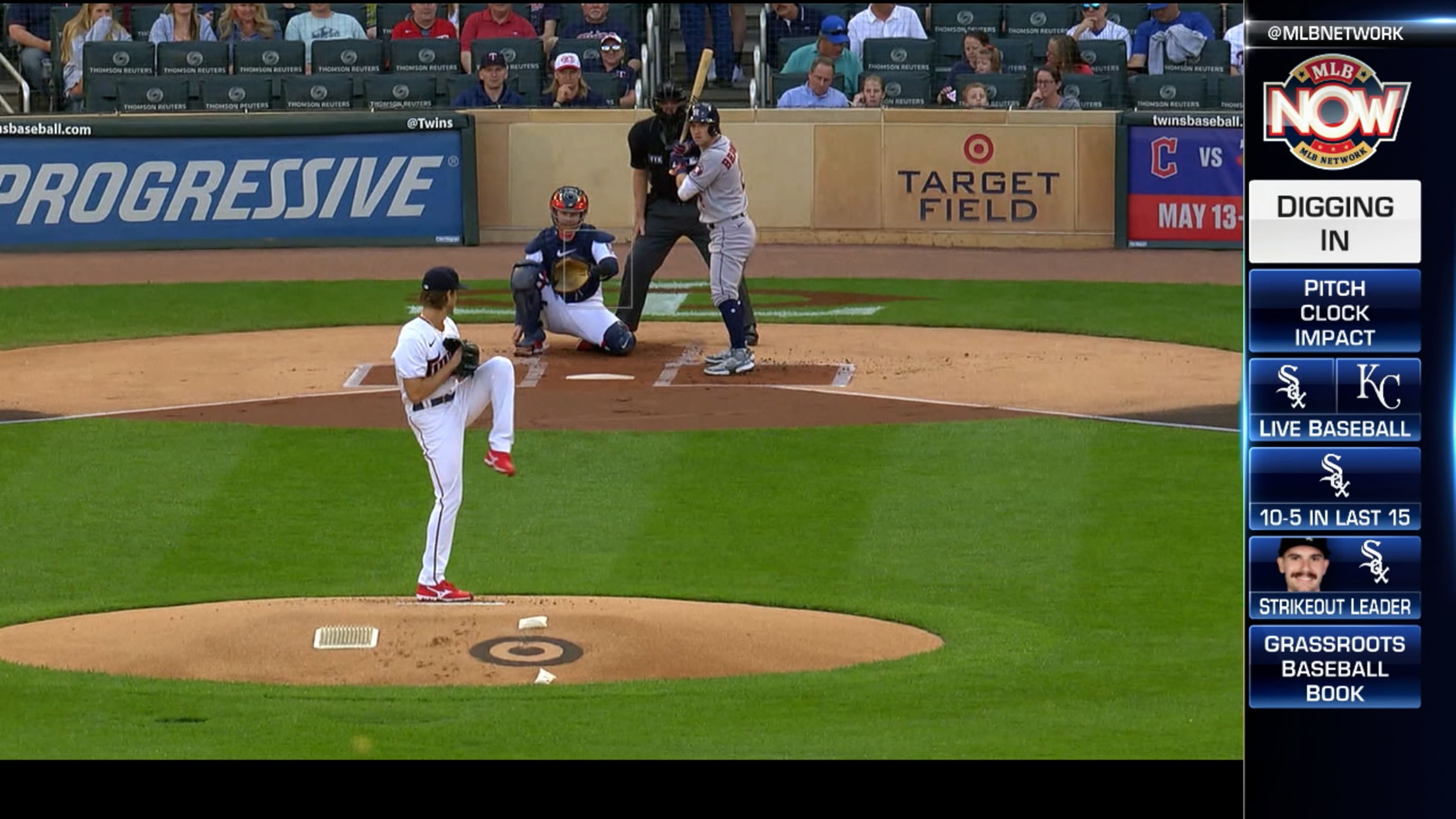
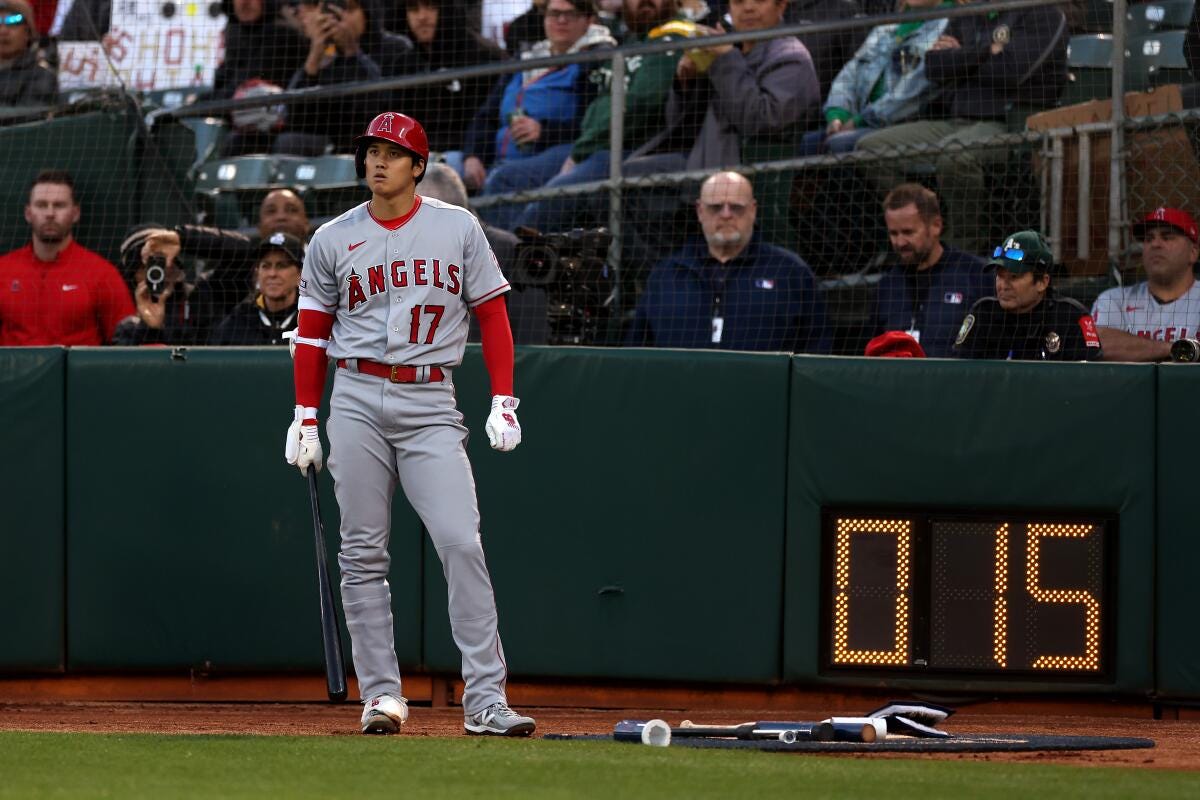
Caption: The pitch timer, introduced in 2023, has reshaped the rhythm of baseball, placing a once timeless game on the clock.
I’ve always been impressed by how much baseball players spit.
But that’s not what struck me on opening day this year, as I watched Detroit Tigers pitcher Tarik Skubal’s team demolish the San Diego Padres. What stood out for me was the clock—and wondering what might happen if it struck 15.
Watching the game, I suddenly realized that pitchers now have a fixed number of seconds between pitches. What had long been a timeless game, unfolding at its own pace, was now being measured, counted down, and enforced. I found myself surprised, even a bit unsettled. Something fundamental had changed.
Once the clock shock had passed, I could reclaim my role as a trained observer of behavior. I turned my attention to the familiar small acts between pitches: the spitting, the glove adjustments, the stepping out and back in. Having previously looked at baseball through an anthropological lens, I realized that these behaviors, although routine, were not at all meaningless.
The behavior I observed was not random; it was patterned, repeated, and shared—cultural, in other words. It belongs to baseball as part of the game’s embodied routine. And like many such routines, it begins to look less like habit and more like ritual.
Anthropologists have long been interested in what Bronisław Malinowski called magic in situations of uncertainty, and George Gmelch brought that insight memorably into American sport in his classic essay “Baseball Magic.” Malinowski argued that ritual becomes especially important where outcomes are uncertain and control is incomplete. Gmelch showed that baseball players, much like the Trobriand Islanders in Malinowski’s account, use rituals, taboos, and small repeated acts to manage chance and anxiety, especially in pitching and hitting rather than in fielding.
Few modern activities combine skill and uncertainty as thoroughly as baseball. A hitter can do everything right and fail most of the time. A pitcher can execute a perfect pitch and still give up a hit. Outcomes hinge on fractions of inches and split seconds. The game invites, even demands, practices that help players feel that they are managing what they cannot fully control.
Seen in that light, spitting is not trivial. It belongs to a broader system of bodily practices that includes adjusting batting gloves, stepping out of the box in a precise sequence, tapping the plate, smoothing the mound, or repeating a pre-pitch routine. Each act is small. Together, they form a patterned response to uncertainty.
Spitting, in particular, has a physical immediacy. It marks the body’s presence in the moment. It punctuates time between pitches. It can signal reset, focus, or transition. Like other ritual acts, it may be practical and symbolic at once.
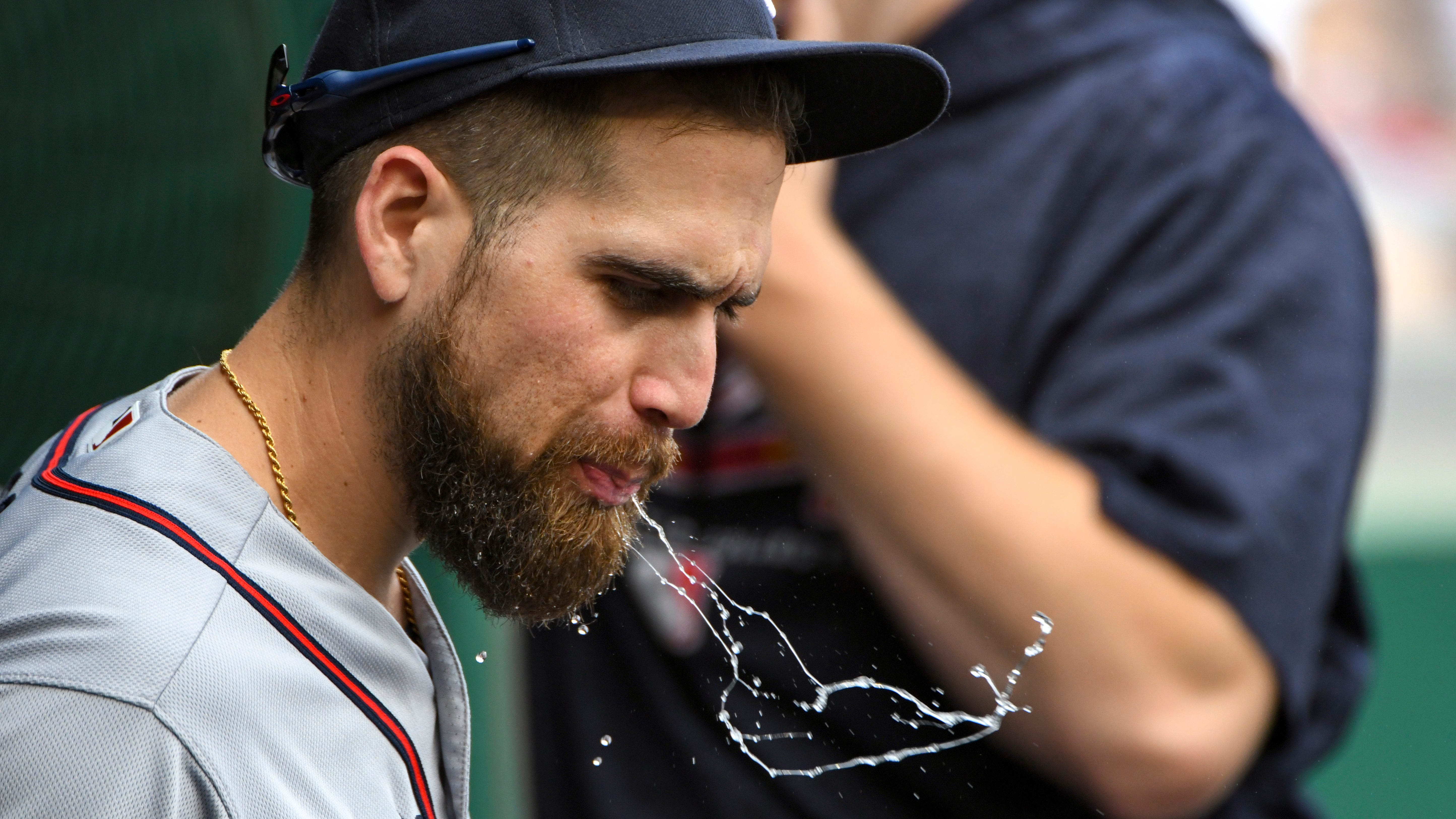
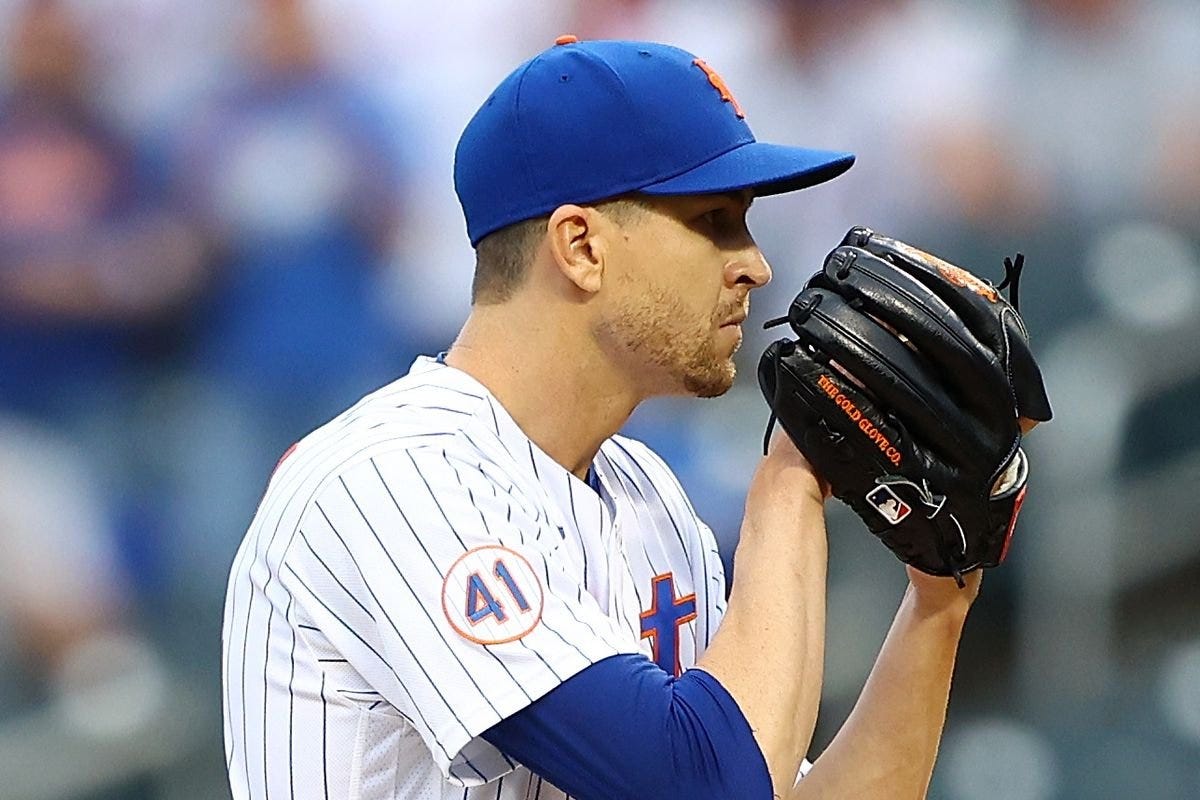
Caption: Between pitches, players perform small, repeated acts: spitting, adjusting gloves, stepping out and back in, which help structure the moment.
Spitting may also have another, more primal dimension. Watching the game, I found myself wondering whether it functions, at some level, as a kind of territorial marking. Many animals mark space through bodily substances, leaving traces that signal presence and claim. It would be too simple to say that ballplayers are doing the same thing. But the analogy is suggestive. On the mound or in the batter’s box, the player is momentarily in command of a small, bounded space. Spitting may be one way of registering that presence physically, of asserting, however subtly, “this is my spot, for now.”
There is also a social dimension. These behaviors are learned. Younger players observe veterans, imitate them, and absorb what counts as normal baseball conduct. What begins as observation becomes habit, and habit becomes tradition.
Baseball is full of such practices. Some are formal, like rules and statistics. Others are informal, like superstitions and routines. Together they create a cultural system in which meaning accumulates through repetition.
That is part of what gave baseball its distinctive feel. Unlike sports governed by a continuously running clock, baseball traditionally allowed more dead time between moments of action. Those pauses made room for ritual, for the small acts that bridged one uncertain moment to the next.
The clock enters the game
One recent change makes this even clearer. In 2023, Major League Baseball introduced a pitch timer after several years of testing in the minor leagues. Pitchers now have 15 seconds between pitches with the bases empty and slightly more time with runners on base. What had long been a timeless game was suddenly placed on the clock.
At first glance, this seems like a technical adjustment, designed simply to speed up play. And it has done that. Games are noticeably shorter and more continuous.
But culturally, the change runs deeper. Baseball had long allowed players to create their own rhythms, to linger, to reset, to build tension through delay. Those pauses were not empty. They were among the spaces in which ritual lived.
The pitch timer compresses those spaces. Pitchers can no longer wander indefinitely behind the mound. Batters cannot step out and restart their routines without limit. Time is now imposed from outside the player rather than generated from within the game.
And yet the rituals have not disappeared. They have adapted. The glove adjustments are quicker, the pauses shorter, the sequences tighter. What once unfolded more leisurely is now compressed into a few seconds. The need to manage uncertainty remains. Only the tempo has changed.
If anything, this makes the underlying point more visible. Even when the game is rationalized, regulated, and accelerated, players still perform the small acts that help them feel ready for what comes next. The magic persists, even under the clock.
We might be tempted to dismiss these behaviors as mere superstition. But that would miss the point. They are not survivals of a premodern past. They are contemporary expressions of a very human tendency to create order in the face of uncertainty.
Baseball makes rituals more visible than they usually are. In many areas of life, people develop routines, gestures, and habits that serve similar purposes. They are rarely acknowledged as magic, but they function in similar ways.
Spitting, then, is not just a quirk. It is one small part of a larger system through which players manage uncertainty, mark time, and prepare themselves for action. It is, in its own modest way, a form of magic.
And that may be one reason baseball continues to resonate. Beneath the statistics and the spectacle, it reflects something fundamental about human behavior. We plan, we practice, we calculate. But when the outcome is not fully in our control, we also rely on small acts that help us proceed.
Even now, with the clock counting down, players still find ways to act between moments, to prepare themselves, to believe that what they do matters. The game has changed. The need for ritual has not.